It's wrong to see a limited window of time at a club as never ending practice opportunity, which in the end can only lead to poorer practice. Asking yourself, what do I want to improve, and how do I know when something starts to get worse, will lead to more effective practice than asking yourself how much equipment and ammo you can cart to the range.
Start with one clear purpose
Your time at the range needs to be used effectively. Set a short number of goals with a primary goal to focus on, and a secondary goal to develop. The primary goal could be something simple like developing a solid grip or being able to set up to shot safely. Your secondary goal would be to work on something that helps to support your primary goal, i.e. solid sight alignment to go with a solid grip.
Observable nature of goal(s): Write the goal(s) for short sessions in observable terms (e.g. "maintain same visual reference through a slow string" rather than "improve"). These become the basis for deciding whether or not you have accomplished your objective(s) for each repetition of shot. (Note: You don't want to create a performance test for yourself for short sessions.)
Remember a coach may identify a basic issue that needs to be addressed prior to shot being taken. So what appeared to be an accuracy shot may end up being a stance, grip or even sight picture shot. Although it's been described as a short session it doesn't mean all that time will be spent shooting balls.
Make the preparation check part of practice
Be sure to check the up-to-date range rules and required equipment before you leave for home. Always check the club required equipment in a calm and safe environment and follow the manufacturer's instructions. Always follow the posted hours and check the club's procedures before visiting the range.
Damage, looseness, corrosion, blocked openings, mal-functioning parts, etc. need to be recognized and checked for prior to leaving for a shoot. If there is any doubt as to the safety and function of any item do not take the risk – check with a range professional or a gunsmith.
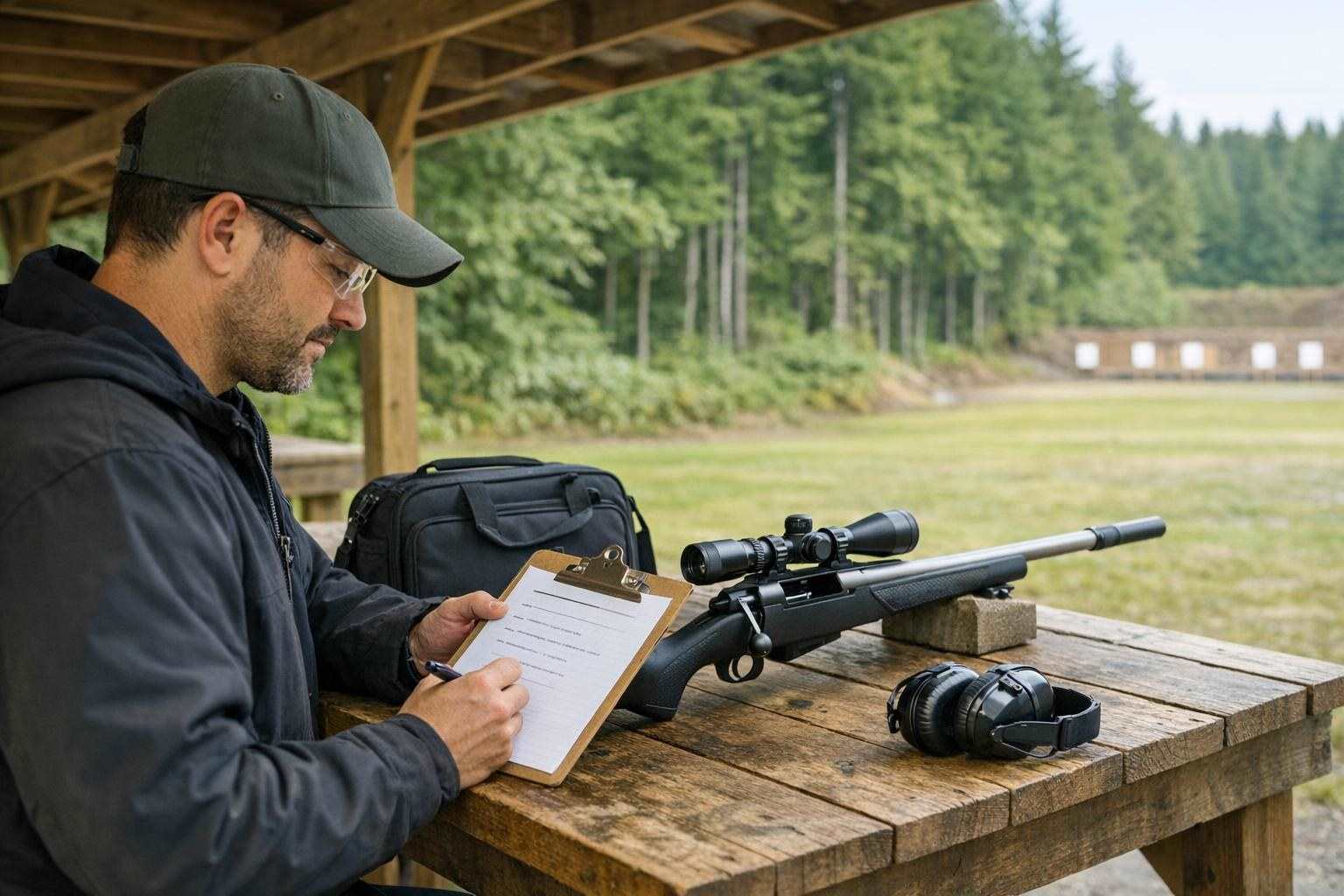
A useful preparation note would contain the goal, the equipment to be checked before going to the range, the safety points and the end point for the session. This must be briefly noted before going to the range to remove decisions once the session has started.
Build a short session around fundamentals
In terms of exercise you need to establish your own safe handling of shooting equipment and familiarize yourself with the club's procedures within the first part of your session. This should include following any posted commands and adhering to any specific facilities rules as communicated by the range staff. Muzzle to be pointed in the safe direction as specified by the facility and trigger finger to be outside of trigger guard until ready to shoot and under the applicable rules.
Also don't worry that you haven't managed to complete loads of repetition. Short sessions between re-setting up for the next activity allow for more examination of what has happened during the activity. With careful thought even a few reps can reveal a lot.
Ask one simple question per session between shots. Do the sights sit in the correct position every time? Does the trigger press require any additional movement? Are you able to keep an eye on the surrounding range? Keep notes in simple point form and keep them very brief.
Decide when coaching will help
Before you take a shooting lesson, decide what your goals are for that lesson. Tell the instructor what you are trying to improve, what you have noticed about your shooting and where you are unsure. A good instructor can tell you whether or not your equipment is causing problems with your shooting and can set up a drill to suit your skill level and the range you are at.
Ask for clarification if you are unsure of an instructor's command. This includes range commands, methods of loading ammunition, the condition of firearms and other equipment and safe directions for aiming the muzzle of a firearm. This is not something that you should continue to do when unsure of safety. Stop and ask for clarification in an appropriate manner.
Make one change at a time. Even the best athlete develops slowly with one new skill at a time. Equipments can worsen, even make other things you do worse. They should be developed in isolation, so that you can eventually tell if they have gotten better, or worse.
Treat unusual behavior as a stop sign
Unusual behavior of a firearm such as a sudden change of sound, of recoil, of cycling, of the trigger feel or of the point of impact needs immediate attention. A firearm that fails to fire, an ammunition that looks damaged, a control that gets stuck or any other behavior that leads to uncertainty as to the safe operation of a firearm needs to be stopped immediately and handled according to the range rules as if it were to malfunction.
Remember to not attempt to look into the barrel of a firearm, to not try to make a firearm go off when it isn't supposed to, to not attempt to recreate an incident in order to see if it happens again, and that unusual behavior by a firearm or ammunition is best to be dealt with by Range Staff or other qualified Range Personnel and Gunsmiths.
Remember too that fatigue, poor concentration, hearing discomfort or even stress all affect shooting and should be taken into account when deciding to end a shooting session. A short visit is just that – don't feel pressured to make best use of every minute of it.
Close the visit with a useful record
Finally end your session at the range by methodically dismantling your shooting station and conduct a final physical equipment inspection, reference manufacturer's instructions as needed. Write down goal, insight acquired and outstanding issues to be addressed on subsequent range visits and go home. Note, recording an endless list of shooting parameters does not constitute beneficial recording of shooting practices.
Note how firearms and related ammunition can be stored and transported in accordance with all relevant laws, manufacturer's instructions and this Club's requirements. Again, these requirements can change, so please refer to current official guidance in relation to these aspects.
Remember that a practice plan for personal use should make responsible shooting decisions easier, not present a list of issues to solve. Set a simple goal for what you want to achieve, leave room for a good coach to offer improvements and cancel practice early if you find that safety or your shooting equipment are a problem.


Comments